Two sources. Two numbers. One decision.
You have already seen it: the Notion page says one refund threshold, yesterday’s Slack thread says another. Someone asks the assistant. It answers as if there were only one number.

We already wrote about why company knowledge breaks at scale. This is the next problem: what the system does when two live sources already disagree.
Most retrieval tools pick a side or blend the two and keep talking. Mention’s public claim is the opposite. It surfaces the conflict and asks you to decide. People and agents then work from the same pick.
The Notion-versus-Slack refund pair on the homepage is a demo, not a customer metric. The product behavior is what matters.
Two kinds of conflict
A source conflict is two documents, or a document and a thread, that state different facts. Org admins settle those on Sources → Contradictions (unrouted first). Mobile Conflicts is admin-only and does not show owner-routed items.
A misunderstanding is a named member’s claim in a call or chat, set against a document. That one routes to owners of the member’s Audience. Admins can still decide those under All conflicts. Owners do not get a source-conflict queue.
While a conflict is pending, the assistant already hid one side. That is why it can sound sure before you have clicked anything. It is not claiming both sources are true.
Source conflicts: pick a side, or leave both
On a pending source conflict, Mention prefers the newer source and hides the older one from the AI. Auto-resolve can stage newest-wins. It does not commit that rule on its own. Generic assistants often do not pick newest reliably. Mention does, on purpose, until an admin settles it.
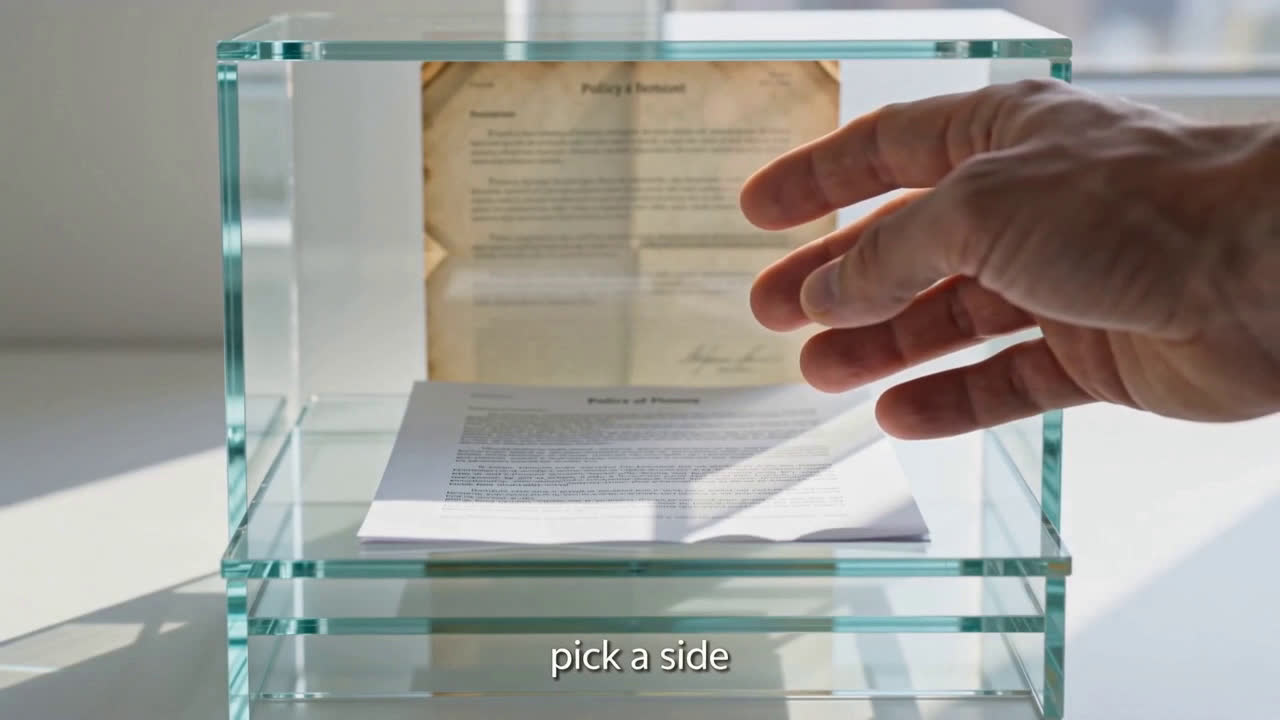
Admin actions are pick a side or dismiss. Dismiss means both sources stay. The conflict is closed without invalidating either fact. Use that when they are not actually about the same thing, or when you are not ready to kill one.
When you pick a side, the losing fact is invalidated for the org. The next Ask and the next article follow the pick. Old chats are not rewritten. People and agents see the same invalidated fact going forward.
Misunderstandings: the document holds, until you say otherwise
A misunderstanding is not “two docs.” It is a person saying something a document does not.
While it is pending, Mention prefers the document and hides the member’s claim from the AI. The actions are different from a source conflict: Confirm our docs, Our docs are stale, or Not a conflict.
Only Confirm our docs notifies the member, and only with the winning statement. It does not send “you were wrong.” The other two outcomes stay between the owner and the queue.
A Gap is not a Conflict
A Gap is an unanswered Ask: Mention could not ground a reply in activated sources. Owners work those misses on the Audience, grouped by meaning.
A Conflict is the opposite shape. The sources (or a person and a source) already said two things. You are not missing an answer. You are missing a decision.
Questions
What happens when two company docs disagree?
Mention opens a source conflict on Sources → Contradictions instead of blending the two lines. An org admin picks a side or dismisses. Until then, the newer source is what the AI can see.
Why does the AI sound sure while I have not decided?
On a pending conflict it has already hidden one side. Source conflicts hide the older source. Misunderstandings hide the member’s claim. The confident tone is a hidden loser, not a settled policy.
Does Mention pick the newest source?
On a pending source conflict, yes: newer wins until you pick, and auto-resolve can stage newest-wins. On a misunderstanding, no: the document wins and the member’s claim stays hidden.
If I dismiss a source conflict, what happens?
Both facts stay. Nothing is invalidated. Mention stops asking you to pick that pair, and the next Ask can still see both sources.
After I pick a side, do people and agents still see the loser?
Not on the next Ask, and not in the next article. Old chats are left as they were. The losing fact is invalidated org-wide from that submit forward.
Is a Gap the same as a Conflict?
No. A Gap is a question nobody could answer from the sources. A Conflict is two answers that cannot both be current. Fill a Gap. Decide a Conflict.
If two of your sources already disagree, Mention is built to bring you that decision once, then keep people and agents on the same side of it.